How to write a dating profile that actually works in 2026
78% of people would rather hear your prompt answer than read it. Bios under 3 sentences outperform long ones. Your first photo matters more than all others combined. Data-backed advice, not generic tips.
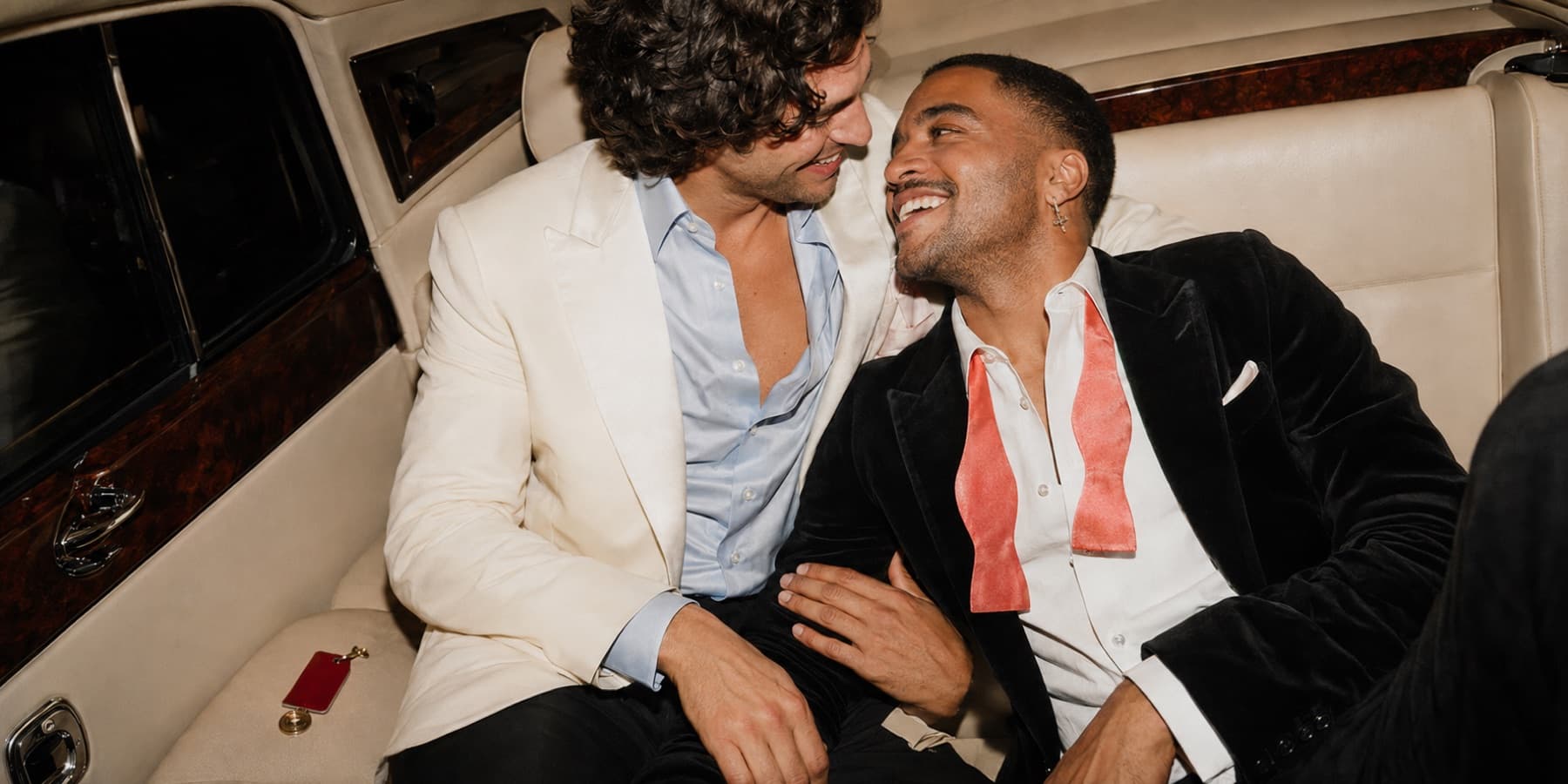
Your dating profile is a landing page. It has three seconds to convince someone to stop scrolling and pay attention. Everything you know about making a good first impression in person, the firm handshake, the eye contact, the way you carry yourself, is irrelevant. Online, you are six photos, three prompts, and a bio. That's it. That's all of you, compressed into a rectangle on someone's phone screen while they're sitting on the toilet or waiting for a coffee order.
Most dating advice about profiles is garbage. It also tends to ignore what women consistently report wanting from these platforms. "Be yourself." "Show your personality." "Don't try too hard." Vague directives that sound wise and help no one. What follows is specific, data-backed guidance on what actually works on Hinge, Bumble, and Plus in 2026. Some of this will contradict advice you've read elsewhere. Good. The other advice isn't working, which is why you're reading this.
Your first photo is your entire profile
Hinge's internal data shows that the first photo in a profile determines whether someone engages more than all subsequent photos combined. People make a stay-or-swipe decision based almost entirely on the first image, then use the remaining photos and prompts to confirm or revise that initial impression. This isn't shallow. It's how visual cognition works. First impressions happen in 100 milliseconds, and on a dating app, the first impression is a photograph.
What the first photo needs to do: show your face clearly, in good lighting, with a genuine expression, in a context that suggests something about your life. That's four requirements, and most profiles fail at least two of them.
Clear face means no sunglasses, no hats casting shadows, no photos taken from thirty feet away at a wedding where you're one of twelve groomsmen. Your face should occupy at least 40% of the frame. The human eye is drawn to faces above all other visual elements, and a dating app is a context where faces are the primary content. Don't make someone zoom in to find you.
Good lighting means natural light, almost always. The golden hour, roughly thirty minutes before sunset, produces the most flattering light for any skin tone because it's warm, directional, and soft. Photos taken in harsh overhead fluorescent lighting (offices, gyms, bathrooms) look bad on everyone. Photos taken in dim bars or restaurants look blurry and unflattering. If you have one sunny Saturday afternoon available to take new dating photos, stand near a window or go outside between 5 PM and 7 PM. That single change will improve your first photo more than any filter or editing app.
Genuine expression means something other than the dead-eyed stare that so many male profiles default to, or the head-tilted half-smile that shows up on just as many female ones. The photos that generate the most engagement show a real moment: laughing at something off-camera, concentrating on an activity, reacting to something surprising. Candid photos outperform posed photos in matching rates because they signal authenticity, which is the most attractive quality on a platform where everyone suspects everyone else is performing.
Context means the background tells a story. You on a hiking trail in the mountains. You in a kitchen that looks lived-in. You at a restaurant with a glass of wine and a genuine smile. The context answers the question "what would it be like to spend time with this person?" without you having to write a word. An interesting background does more for your profile than an interesting bio.
The photos that hurt you more than they help
Group photos where it's unclear which person you are. Every person who's ever swiped on a dating app has experienced the frustration of trying to identify someone in a photo of five people at a table. If someone has to work to figure out which one is you, they won't. They'll swipe left and move on. If you include a group photo, make it photo four or five, never photo one, and ensure you're obvious in the frame.
Fish photos. This is well-trodden ground but deserves repeating. The man-holding-a-fish photo is the single most common profile mistake in American dating apps and the one that women cite most frequently as an instant left-swipe. You caught a fish. Congratulations. Unless you're specifically looking for someone who is passionate about fishing, the photo communicates nothing about you that's relevant to dating and actively repels a significant percentage of potential matches. Replace it with literally any other photo of you doing literally any other activity.
Gym selfies. Working out is great. Gym selfies signal that you work out, which is less appealing than you think. The issue isn't the fitness. It's the context. A gym selfie says "I stood in a mirror with my phone and decided I looked good enough to photograph myself." It reads as vain on men and performance-oriented on women. If you want to show fitness, use a beach photo, a hiking photo, a sports photo, or any photo where you're active in a natural setting rather than posing in front of a mirror with dumbbells visible.
Photos that are obviously old. If your profile photos show you at twenty-five and you're now thirty-two, you're not putting your best foot forward. You're misrepresenting yourself. When you show up to a date looking noticeably different from your photos, the trust is broken before you've said a word. Use photos from the past six months. A year at most. The person who walks through the restaurant door should be recognizably the person in the photos.
Photos with exes cropped out. Everyone can see the disembodied arm around your shoulder. Everyone knows what it means. It's not a big deal, but it's lazy, and lazy is never the right signal for a first impression. Re-take the photo or pick a different one.
Do voice prompts on dating apps actually work?
Hinge reports that 78% of its users would rather hear your answer to a prompt than read it, and 65% say hearing a voice helps them judge whether they're interested. What Hinge does not claim — and what gets repeated everywhere anyway — is a guaranteed lift in matches. What it does report is downstream: conversations that included a voice note were Hinge 41% more likely to lead to a date in 2025. That is a claim about conversations, not about profiles, and the distinction matters — the voice note helps once someone is already talking to you. A bad recording can still cost you.
Why voice notes work: they transmit personality information that text can't. Tone, pacing, humor, warmth, accent, energy. Reading "I love cooking Italian food" tells you almost nothing about a person. Hearing someone say it, with a laugh and a pause and an emphasis on the word "love," tells you something real. Voice notes break through the flatness of text profiles and give the person reviewing your profile a moment of feeling like they're actually interacting with a human being rather than reading a resume.
What to say in a voice note: tell a short story. Not a fact. A story. "Last week I tried to make pasta from scratch for the first time and I somehow got dough on the ceiling. I still don't know how it happened, but the pasta turned out incredible." That's twelve seconds. It shows humor, it shows you cook, it shows you don't take yourself too seriously, and it gives someone a concrete detail to reference in their first message. Stories create connection. Facts create information. You want connection.
What not to say: your height, your job title, a list of things you're looking for, or anything that sounds like it was written and then read aloud. The voice note should sound natural, like you're talking to a friend at a bar. Record it in one take. If it's polished, it sounds rehearsed. If it sounds rehearsed, it defeats the purpose.
How to write prompts that actually start conversations
Hinge and Bumble both use prompt-based profiles where you answer questions as a way to show personality. The prompts you choose and how you answer them determine whether someone has a natural opening to start a conversation or whether they're stuck sending "Hey, how's your week going?" because your profile gave them nothing to work with.
The rule is simple: every prompt answer should give the reader something specific to respond to. This means concrete details, not abstract qualities.
Bad prompt answer: "I'm looking for someone who's adventurous, funny, and kind."
Good prompt answer: "I will not shut up about the hole-in-the-wall taco place I found in East Austin that's open until 2 AM and doesn't have a sign on the door."
The bad answer describes qualities that literally everyone lists. It gives a potential match nothing to say except "I'm adventurous too!" which is boring for both people. The good answer is specific, opinionated, slightly mysterious, and gives the reader a natural entry point: "Wait, where is this taco place? I need to know."
Adjective lists are the enemy of good prompts. "I'm passionate, driven, loyal, and love to laugh." You've described every person on the planet. These words communicate nothing because they're universally claimed and impossible to verify from a profile. Replace every adjective with a specific anecdote, preference, or opinion. "Passionate" becomes "I've watched every episode of Chef's Table twice and I'm not apologizing." "Adventurous" becomes "I booked a one-way flight to Lisbon last year and figured out the return flight from a cafe in the Alfama neighborhood." Specificity is the difference between a forgettable profile and one that makes someone stop scrolling.
The bio: shorter is better (and here's why)
Bumble and Tinder both feature written bios. Conventional wisdom says a thorough bio shows effort and gives people more to work with. The data disagrees. Profiles with bios under three sentences consistently outperform longer bios in engagement metrics.
Short bios work for two reasons. First, dating app users are scanning, not reading. A three-sentence bio gets read. An eight-sentence bio gets skimmed, which means most of it is wasted. Second, a short bio forces you to distill your personality into its most essential, interesting elements, which is a harder exercise than writing a long bio but produces a more compelling result.
Here's a bio that works: "Architect who doesn't talk about architecture unless you ask. Best meal I've ever cooked was a mistake. Looking for someone who has opinions about things."
Twenty-two words. Three sentences. It communicates career, skill, humor, and what you're looking for. Each sentence gives a potential match something to comment on or ask about. The person reading it learns enough to be intrigued without learning so much that the first date has nothing new to discover.
Here's a bio that doesn't work: "I'm a fun-loving guy who enjoys hiking, traveling, trying new restaurants, and spending time with friends and family. I work in finance but I'm not boring, I promise! Looking for my partner in crime who can keep up with my adventurous lifestyle. If you can make me laugh, you're already winning. Swipe right if you like dogs, tacos, and sunsets."
Everything in that bio is generic. "Fun-loving." "Partner in crime." "Make me laugh." "Dogs, tacos, and sunsets." These phrases appear in millions of profiles. They communicate nothing unique. They're the profile equivalent of a stock photo: technically depicting a human experience but completely devoid of anything that makes you want to know more. Delete everything that could appear in someone else's profile. Whatever's left is your bio.
The anti-advice: stop doing these things immediately
Stop listing your height unless you're on Tinder where height fields are standard. On Hinge and Bumble, using a valuable prompt slot to state "6'1" because apparently that matters" communicates insecurity about whether you bring anything else to the table. If you're tall, it'll be obvious in your photos. If you're not tall, leading with your height defensively doesn't change the number and does signal that you think it's your defining characteristic.
Stop saying "looking for my partner in crime." This phrase has been the most overused dating app cliche for the better part of a decade. It means nothing. What crime? Jaywalking? Tax fraud? The person reading your profile has seen this phrase forty times this week. It doesn't register anymore. Replace it with what you actually want: "someone who'll fly to Tokyo on a long weekend because the flights were cheap" or "someone who'd rather cook at home on a Friday than go to the same bar again."
Stop using all group photos. Profiles that are entirely or mostly group photos fail the basic test of dating apps: showing someone what you look like. Solo photos in your first three slots. Groups, if at all, in slots four through six.
Stop writing prompts that are actually requirements lists. "Don't bother if you're not active, ambitious, over 5'10", college educated, and ready for a serious relationship." Requirements lists repel people who would otherwise be interested. They read as demanding, rigid, and slightly hostile. State what you want positively instead of listing what you don't want. Attraction is built by showing what you bring, not by listing tests that someone has to pass.
If you're building a profile from scratch, Plus lets you set this up in two minutes with prompts designed for specificity over generality.
Plus-specific profile tips
If you're creating a profile on Plus, the mechanics are different from Hinge or Bumble and the strategy should be too.
The "What matters to you" section is the most important part of your Plus profile. This is where you describe what you're looking for in a connection, what you value, and what you bring. Unlike Hinge prompts that reward wit, the Plus "What matters to you" section rewards honesty. Write what you actually want. "I'm looking for someone who's financially established, generous with their time, and genuinely interested in building something beyond surface-level dating." That's direct, clear, and will attract exactly the right people while filtering out the wrong ones. On Plus, directness isn't a risk. It's the entire point of the platform. We wrote about how private dating works and why directness produces better outcomes.
The "My +" traits section lets you highlight what makes you distinctive. Don't waste these on generic qualities. "Smart" and "ambitious" describe half the population. "Speak four languages," "Built a company from scratch," "Trained as a classical pianist for twelve years," and "Can cook a five-course Italian dinner with no recipe" are specific, memorable, and give someone a reason to message you. These traits are your advertising copy. Make them count.
Photos on Plus should lean slightly more polished than on Hinge or Bumble. The platform's user base expects a level of presentation that matches the premium positioning. This doesn't mean studio portraits or over-filtered images. It means high-quality photos in well-chosen settings: a good restaurant, a travel destination, an event where you're dressed well. Your photos should look like someone's best Saturday night, not their typical Tuesday morning.
Verification is your strongest signal on Plus. Complete both photo and income verification as soon as possible. Verified profiles on Plus receive dramatically more attention because verification communicates trustworthiness, which is the single most valued quality on a platform built around transparency. An unverified profile on Plus is like an unsigned contract: technically present but practically useless.
Before and after: real profile rewrites
These examples are composites based on patterns we see across thousands of profiles. Names and details are changed.
Before (Hinge prompt "My simple pleasures"): "Coffee, good music, and sunsets."
After: "Making pour-over coffee so slowly on Sunday morning that it becomes a meditation. My neighbors probably think I'm insane."
Why it works: the before is a list of universals that tells you nothing. The after is a specific ritual that reveals personality, pace of life, humor, and self-awareness. It's also easy to respond to: "How slow are we talking? Like, minutes or hours?"
Before (Bumble bio): "Love to travel and try new things! Looking for someone who doesn't take themselves too seriously. Let's go on an adventure!"
After: "Took a ceramics class on a whim last month and now my apartment has fourteen lopsided bowls. Next project is learning to sail, or at least learning not to drown."
Why it works: "love to travel" is a fact about you that tells nothing. Fourteen lopsided bowls is a story that shows you try things, commit to them imperfectly, have a sense of humor about it, and live a life with texture. The sailing line is forward-looking and gives someone a natural date suggestion: "I'll teach you to sail if you make me a lopsided bowl."
Before (Plus "What matters to you"): "I want someone who's honest and has their life together."
After: "I've spent two years building something I'm proud of, and I want to share it with someone who's done the same. I'm generous with my time and energy, and I'm looking for someone who matches that. Honesty about what you want isn't just attractive to me. It's required."
Why it works: the before is vague and passive. The after is specific about what you bring (warmth, ambition, accomplishment), what you expect in return (parity, honesty), and the tone of the connection you want (direct, confident, reciprocal). It attracts exactly the right matches and repels the wrong ones, which is what a good profile does.
The profile as a filter, not a billboard
The fundamental shift in thinking that separates good profiles from mediocre ones: your profile's job isn't to attract everyone. It's to attract the right people and repel the wrong ones. A profile that appeals to everyone is generic by definition. A profile that appeals strongly to your specific target audience will inevitably not appeal to people outside that audience, and that's the goal.
If you love jazz and spent three years learning to play piano, put that in your profile even though most people don't care about jazz. The 5% who love jazz will message you with genuine enthusiasm, and those conversations will be infinitely better than the generic conversations you'd get from a profile that said "I love music." The goal is fewer, better matches. The cost of dating apps in 2026 is already high enough. Don't spend hundreds of dollars a year getting matches with people who aren't compatible.
Be specific. Be honest. Be slightly polarizing. Write something that would make someone who's right for you laugh or nod, and someone who's wrong for you scroll past. That's not a failure. That's the profile working exactly as it should.
Build your Plus profile with these principles and see what happens. The platform is designed for the kind of directness that makes great profiles possible.
Frequently asked questions
How many photos should I have on my dating profile?
Six is the standard across Hinge, Bumble, and Plus. Use all available slots. Your first photo should be a clear, well-lit solo shot of your face. Photos two and three should show your body and your lifestyle. Photos four through six can include activities, travel, social settings, or one group photo where you're clearly identifiable. All photos should be from the past six months to a year.
Do voice notes really help on dating apps?
Usually, though not automatically. Hinge reports 78% of users would rather hear a prompt answer than read one, and 65% say a voice helps them gauge interest — but Hinge publishes no guaranteed match lift, and a flat or rushed recording can work against you. What voice transmits that text can't is tone, humor, warmth and energy. Record a short story or anecdote in one take, under fifteen seconds, in a natural speaking voice. Don't script it.
What should I write in my dating app bio?
Keep it under three sentences. Include one concrete detail about your life, one thing you're genuinely passionate about, and one signal of what you're looking for. Avoid generic phrases like "partner in crime," "love to travel," or "looking for someone who doesn't take themselves too seriously." Every sentence should be specific enough that it couldn't appear in someone else's profile.
How often should I update my dating profile?
Every four to six weeks. Fresh photos and prompts re-enter you into algorithmic circulation on most platforms, which increases your visibility. Seasonal updates also keep your profile feeling current. A profile with a December holiday photo in July signals inactivity, which reduces engagement from other users and potentially from the algorithm itself.
What makes a dating profile stand out?
Specificity. The profiles that generate the most quality engagement are the ones that replace generic descriptions with concrete stories, preferences, and details. "I'm adventurous" is invisible. "I drove to Big Bend National Park on three hours of sleep because I saw a photo of Santa Elena Canyon and couldn't wait another weekend" is unforgettable. Every element of your profile should answer the question "What is it like to spend time with this person?" in a way that no other profile could.
Ready to get started?
Know someone who'd love this? Earn $5–$12/month per referral
Successful and generous? See why Plus is worth it
More reading → Advice from the Plus blog